When you decide to sell or rent out your apartment, the question is not just whether to paint, but what exactly to paint. Preparing an apartment for sale is not the same as preparing it for rent, and it's rarely necessary to paint everything.1 The goal is to spend only on what truly matters, without wasting money on corners that no one values or that the buyer will change anyway.
This is a practical guide to help you decide where to invest your painting budget and where it's not worth it. We'll discuss return on investment, first impressions, and how to assess the real condition of your home before hiring.
The rooms worth painting: where the sale or rental is decided
The practical rule: paint what the buyer sees in the first 30 seconds (living room, entrance hall, master bedroom, and stained ceilings), in neutral and luminous tones. Most purchase or rental decisions are made during the first moments of a viewing, and property portal photos work exactly the same way.
The living room and entrance hall have the greatest visual impact. They are the first to appear in property portal photographs and they shape the sense of spaciousness and brightness. If these areas show stains, chipped paint, or dark colours, the buyer perceives the home as needing work, even if everything else is in good condition.
The master bedroom also matters. It's where the buyer or tenant imagines living. A peeling wall or an overly personal tone (intense purple, orange, pistachio green) makes that mental projection difficult. In 2026, neutral tones dominate: beiges, sand, olive greens, or warm greys, which amplify light and create a sense of spaciousness.2
Ceilings stained by old damp, even if the problem has been solved, convey neglect. Even if the walls are spotless, a brown stain on the ceiling of the living room or hallway breeds distrust. It's worth sanding, priming, and applying at least one coat of white.
Areas you can leave unpainted without harming the deal
Not everything needs a coat of paint. There are corners that the buyer doesn't value or simply doesn't see with the same criteria.
The interiors of built-in wardrobes, for example, are off the visual radar. If the doors close properly and the outside is clean, no one will open the doors to inspect whether the interior paint is ten years old or has small marks. The same goes for storage rooms, internal pantries, and storage areas that are not part of the regular route.
It also makes no sense to paint a wall that the buyer plans to demolish. If your apartment has an outdated layout (long dark hallway, small closed kitchen, bathroom without ventilation), the buyer most likely has a renovation in mind. Spending money painting those walls is throwing your budget away.
In secondary bedrooms that are in good general condition, a wall with a small scrape or a slight colour difference won't stop a deal. If the flooring is cared for, there's natural light, and the space looks tidy, the detail goes unnoticed. The key is to prioritise: if you have to choose between painting an entire secondary bedroom or the living room and entrance hall, the living room always wins.
Sale and rental: differences in painting strategy
The logic changes depending on your goal. Painting before selling or renting usually pays off because it's one of the cheapest interventions in relation to its effect on viewings and listing photos. But the return is not the same in both cases.
When you sell, you're looking for immediate impact. Photos need to stand out among hundreds of listings. Painting an 80 square metre apartment and carrying out minor repairs costs between 800 and 1,200 euros with an estimated ROI of between 100% and 200%. Execution time is three to five days, and the return is almost immediate at the time of sale. In a sale, you can afford to choose mid to high-range paint with good finish, because you won't be living with it: it just needs to last until you close the deal.
When you rent, durability outweighs aesthetics. The tenant values everything being clean and functional, but you need the paint to last several years without touch-ups. Here it makes sense to go for washable paints in high-traffic areas (entrance hall, hallway, kitchen) and avoid pure matte finishes that mark with any scuff. It also makes sense to leave areas unpainted that the tenant can personalise without damaging the structure (a wall in a secondary bedroom, for example).
In both cases, before accepting any square metre quote, remember that our platform always requests photos and videos of the surfaces. Two 80 m² apartments can have very different quotes if one has popcorn ceiling, old damp, or uneven walls. The final price can only be confirmed after seeing the real condition, whether by image or visit.
When painting is not enough and you need to go further
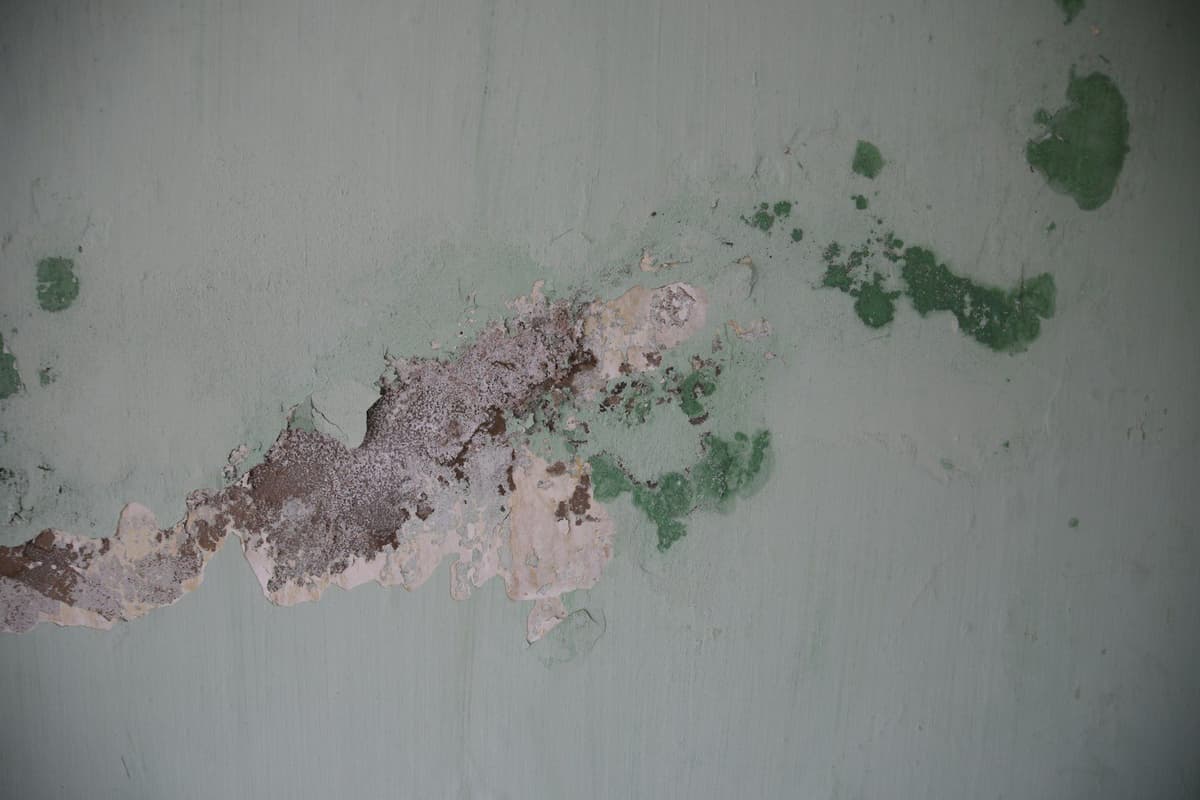
There are situations where a coat of paint only masks the problem for a few weeks. If the walls show active damp (stains that grow, areas that swell, musty smell), painting over it solves nothing. The stain will reappear before the first viewing, and the buyer or tenant will interpret that you're trying to hide a serious defect.
The same goes for structural cracks. A fine, stable crack can be repaired with good filler and primer. But if the crack is wide, irregular, or appears in several points on the same wall, it may signal a foundation or settling problem. In that case, the professional who sees the photos or visits the space will point it out, and the solution involves a technical intervention before painting.
If the popcorn ceiling is very deteriorated or has several layers of cracked plastic paint, sanding and smoothing may cost more than the paint itself, but the visual result is incomparably better. Smooth surfaces reflect light better, visually enlarge the space, and give a sense of modernity that popcorn ceiling doesn't convey, especially in apartments from the 1980s and 1990s in cities like Madrid, Valencia, Seville, or Zaragoza.
How to decide without being swayed by the real estate agent's pressure
Often the real estate agent will tell you to paint everything. It's understandable: their job is to present the home in the best possible condition to speed up the sale. But you don't have to bear that full cost if it's not necessary.
Before committing, get a quote only for the areas that make a difference. Compare the cost of painting the living room, entrance hall, and master bedroom against painting the entire apartment. The difference can be 400 or 500 euros, with minimal impact on the buyer's perception.
If the agent insists, ask: which specific room do you think is stopping viewings? If the answer is generic ("it all needs to be immaculate"), they probably don't have real data. If they point to a specific area ("the living room has a damp stain on the ceiling and that puts people off"), then it's worth acting.
Remember that on our platform the quote is finalised after the professional has seen the space via photos, videos, or a visit. Both options are equally valid. Never accept a fixed price over the phone or without anyone having seen the actual surfaces: two apartments of the same size may need very different work.
What to do if your budget is tight: prioritise by impact
If you can only afford a minimal intervention, focus on light and visual cleanliness. Paint the living room and entrance hall in off-white or light beige, and leave the rest as is if it's in acceptable condition. Painting a home before putting it up for sale remains one of the small renovations with the highest return.
If there are localised stains (a hallway wall, a bedroom corner), just touch up that area with the same tone. You don't need to paint the entire room if the rest is fine. An experienced professional knows how to match tones and make touch-ups invisible.
If in doubt, consult with the painter before deciding. Explain your situation (sale, rental, tight budget) and ask them which areas are a priority. A good professional will tell you the truth: where it's worth investing and where you're wasting money.
Payment on our platform is always structured in two parts: 50% at the start (to reserve the date and buy materials) and 50% at the end, after verifying that everything is correct. This gives you control over the result before closing the full payment.

Ready to paint?
Get free quotes from verified local painters in minutes. No commitment.
Sources
External sources open in a new tab.