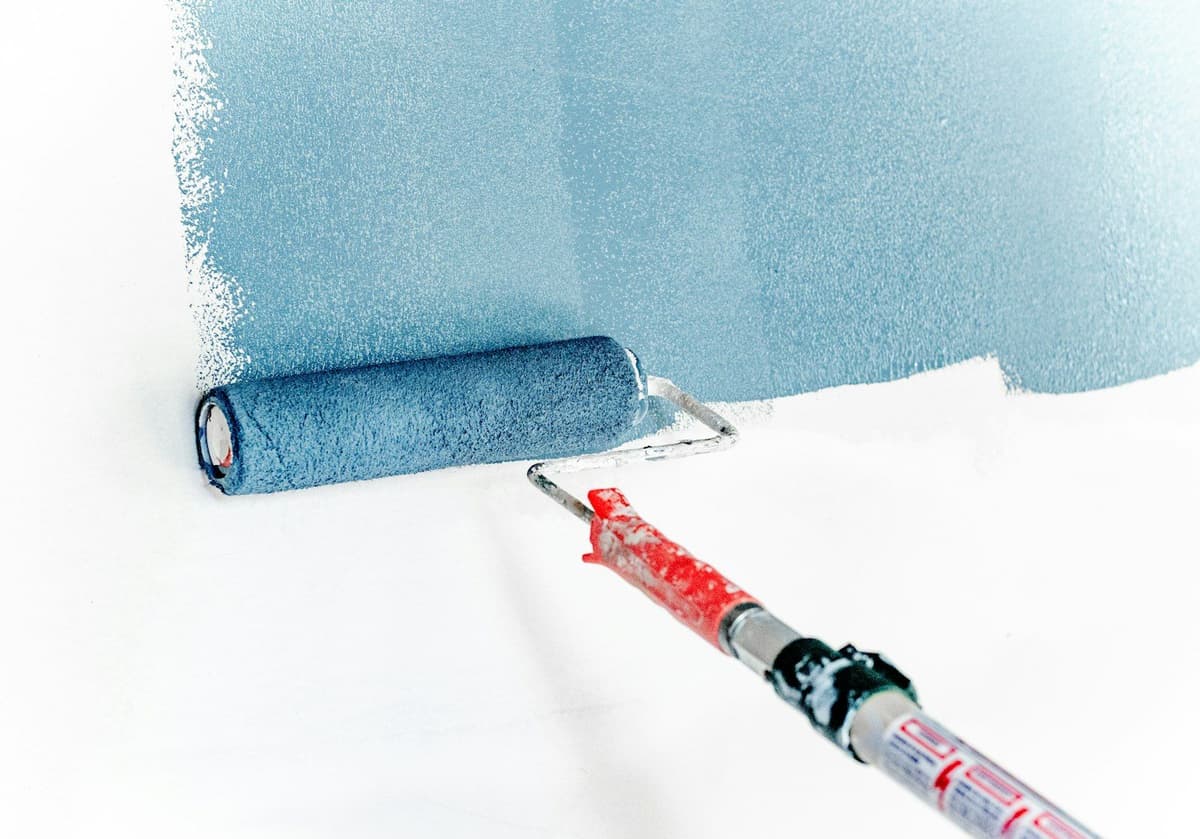
Painting the façade of your home is an intervention that requires specific climatic conditions for the result to be lasting. It is not just about choosing the right paint, but also the right time of year. Extreme temperatures, high ambient humidity, or rainy days can ruin the work before the paint has dried completely. Spanish geography is so varied that the best season to paint a house in Málaga is not the same as in Bilbao or Zaragoza.
Why season matters as much as the paint you choose
When the surface temperature exceeds 30-35 °C, the paint dries too quickly. This prevents it from adhering correctly and can cause cracks, peeling, or an uneven finish. Conversely, temperatures below 5 °C during application or in the 24-48 hours afterward can prevent the paint from forming a proper film.
Relative humidity also plays a fundamental role. When it exceeds 75-80 %, the water in the paint does not evaporate well, which slows drying and can cause staining, lack of shine, or adhesion problems in the long term. In coastal areas of Spain, where humidity is persistent throughout the year, this factor can be more decisive than temperature.
The best time of year to paint façades is spring or autumn, when climatic conditions are usually more moderate and stable1. But this general rule has important nuances depending on the region.
When to paint on the Mediterranean and eastern coast
In Valencia, Alicante, Murcia, Castellón, or the Catalan coast, summer is usually too hot and dry for painting façades exposed to direct sunlight. Temperatures in July and August can exceed 35 °C on the wall surface, especially on south and west-facing walls. Spring (April-June) and autumn (September-October) are ideal: temperatures between 10 °C and 30 °C and low humidity.
In these areas, autumn has an additional advantage: south-facing façades have spent three months absorbing heat, which favors the evaporation of any residual moisture on the substrate before painting. This is especially useful if the wall has any latent dampness problem that was not detected during summer.
Avoid painting during the central hours of the day. Ideally, work early in the morning, once the dew has evaporated, or late in the afternoon, when the wall no longer receives direct sunlight.
Painting on the northern coast: Galicia, Asturias, Cantabria, and the Basque Country
On the Atlantic coast, the problem is usually not extreme heat, but elevated ambient humidity and frequent rain. Precipitation is distributed throughout the year, but is especially intense in autumn and winter. Relative humidity can remain above 75 % for weeks, making it difficult for paint to dry.
In cities like Bilbao, Santander, Gijón, or A Coruña, the optimal window for painting façades is usually between May and September, prioritizing late spring and early summer months. Although temperatures are milder than in the south, the critical factor here is finding several consecutive days without rain and with relative humidity below 75 %.
If you are going to paint in this area, always check the weather forecast 7-10 days ahead. It is not enough that it does not rain on the day of application: the paint needs at least 24-48 hours without precipitation to dry properly.
Interior peninsula: Madrid, Castilla, Aragón, and Extremadura
The interior of Spain has a continental climate with very hot summers and cold winters. In Madrid, Zaragoza, Toledo, Salamanca, or Cáceres, temperatures in July and August can exceed 40 °C in the shade, and the surface of a façade exposed to sunlight can reach 50 °C or more.
In these regions, spring (April, May, and early June) and autumn (September and October) are clearly the best seasons. Summer is only viable if you work very early in the morning or on façades that remain in shade all day.
Winter in the interior can be too cold. Morning frosts and nighttime temperatures below 5 °C prevent paint from drying well, especially in January and February. However, in mild years, November and March can be usable months if daytime temperatures remain above 10 °C.
Interior Andalusia and high solar radiation zones
In Seville, Córdoba, Jaén, or Granada, summer is especially difficult for exterior painting. Temperatures can exceed 42 °C in the shade, and the paint dries within minutes, which prevents uniform application and favors the appearance of roller or brush marks.
Spring is the most recommended season, especially April and May. Autumn is also viable, although in September temperatures can still be very high. October and November usually offer optimal conditions: moderate temperatures, low humidity, and long days that allow work to progress.
In these areas, light colors are not just an aesthetic matter: they reflect solar radiation better, reduce the surface temperature of the façade, and extend the lifespan of the paint.
Islands: Balearic Islands and Canary Islands
In Mallorca, Menorca, Ibiza, and Formentera, the insular Mediterranean climate has its own characteristics. Autumn (September in particular) has shorter days and a slightly higher risk of precipitation, but temperatures remain high and humidity is similar to spring, and south-facing surfaces have spent three months absorbing heat, which favors the evaporation of residual moisture on the substrate.
In the Canary Islands, the climate is more stable throughout the year, with warm temperatures and few seasonal variations. Here it is possible to paint façades at any time, although you should avoid days of intense wind (calima or very strong trade winds) that can carry dust and particles onto fresh paint.
Signs that you chose the wrong time
If the paint takes longer than expected to dry, if moisture stains, bubbles appear, or if the surface remains sticky to the touch after several hours, it is likely that the climatic conditions were not suitable. In those cases, it may be necessary to sand, clean, and reapply.
Other warning signs are very visible roller marks, uneven finish, or the appearance of fine cracks in the days following application. All these problems are usually related to temperatures that are too high, excessive humidity, or sudden temperature changes between day and night.
What to do if you cannot wait for the ideal season
If you need to paint your façade outside the optimal window (for example, because you have a leak that needs to be sealed before winter), there are specific paints for adverse conditions. Solvent-based paints (pliolite) can be applied in conditions of high humidity or lower temperatures than water-based acrylic paints, although they have greater odor and emissions.
It is also possible to work in small sections, choosing the hours of the day with better conditions and protecting the façade with tarps if there is a risk of rain in the following hours. In any case, always consult the paint manufacturer's specifications: each product has a recommended temperature and humidity range that should be respected.
The key is understanding that the calendar is not a matter of preference, but of chemistry: paint needs specific conditions to form a film, adhere well, and protect the façade for years. Choosing the right time according to your region can make the difference between work that lasts a decade and work that starts to fail in the first winter.
Sources
External sources open in a new tab.