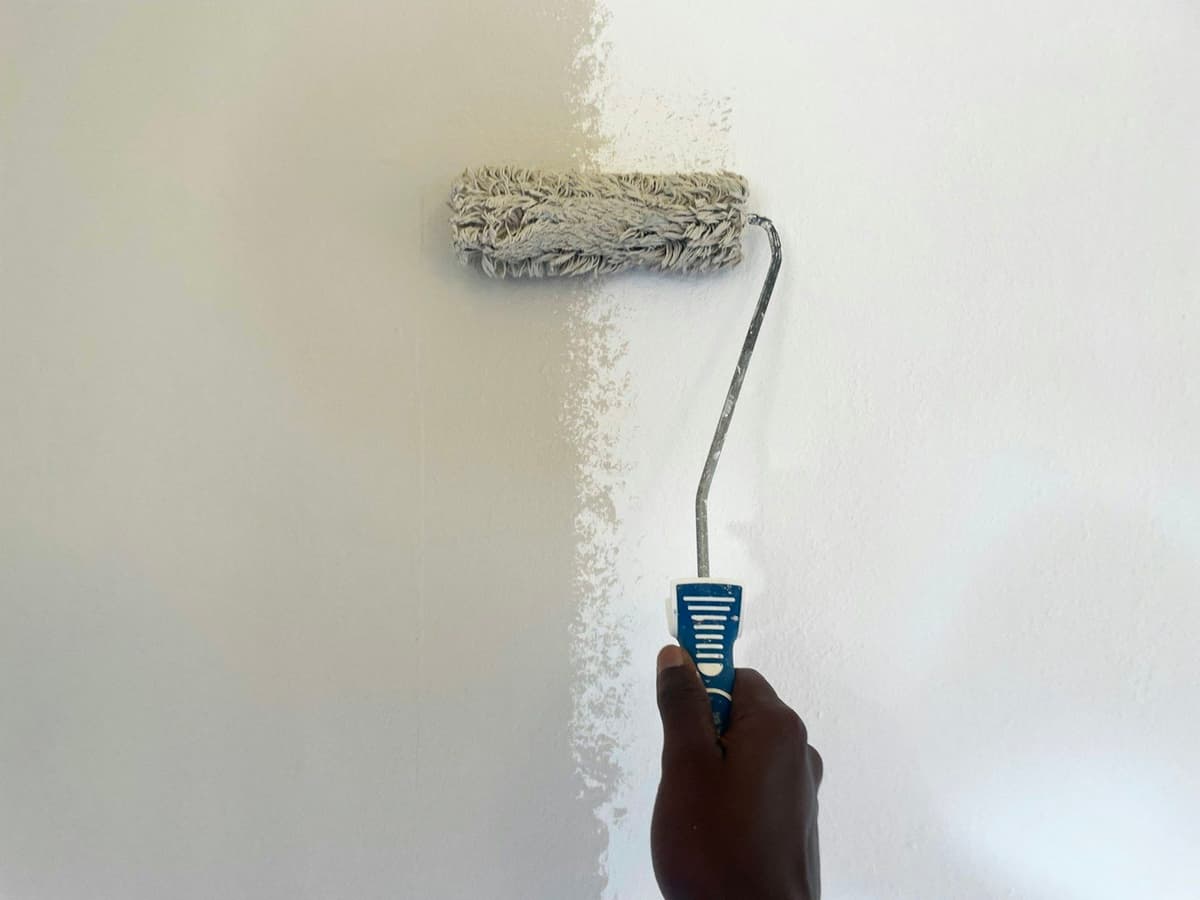
Putting a flat up for sale or rent involves a seemingly simple decision that has a direct impact on the final result: do you paint before advertising it or leave it as is? The answer isn't always the same. There are situations where painting multiplies viewings and reduces time on the market, and others where that expense doesn't pay off.
When painting a flat before selling or renting does make sense
Painting a property before putting it up for sale remains one of the small renovations that offers the best return1, but the payback depends on the starting condition. If the walls have visible stains, dried moisture marks, accumulated scuffs, or intense personal colours (reds, dark blues, bright greens), the visual impact is immediate. A freshly painted flat makes a better first impression. Photos look better, listings perform better, and viewings tend to get a more positive reaction.
In cities like Madrid, Barcelona or Valencia, where competition on property portals is high, a flat with clean, neutral walls stands out against another at the same price but looking neglected. Data shows that a renovated property in Spain sells for between 8% and 15% more than an equivalent without work, and takes 40% less time to find a buyer. Among light renovations, painting ranks first in return on investment: with an investment of just 1,000 to 1,800 euros for a 100 square metre flat, it drastically improves the buyer's perception and speeds up the sale.
For rental, the calculation is similar. Delivering a painted flat lets you justify the market price, reduces downward negotiations, and prevents future tenants from seeing the property as neglected. Neutral tones (whites, beiges, warm greys) make it easier for more people to imagine living there, without having to mentally picture how they'd cover up a personal colour.
When painting adds no value and it's better to adjust the price
Not all properties need painting. If the buyer or investor is going to do a complete renovation, painting is wasted money. For flats sold at renovation price, where the listing makes clear the state needs updating, money spent on painting won't come back. The buyer will strip walls, change the layout, or renovate utilities, and that fresh paint will end up in the skip.
There are also cases where the walls are in good condition: no stains, no obvious scuffs, with a neutral tone that doesn't bother. Here painting is avoidable expense. Sometimes washing certain areas, touching up a few spots, or cleaning switches and frames is enough. Confusing cleaning with a need for painting is one of the most common mistakes.
Another scenario where painting doesn't pay off is when the flat has visible structural problems: significant cracks, active damp, outdated electrical or plumbing systems that the buyer will spot during the viewing. In these cases, paint doesn't hide the underlying issue and the buyer will adjust their offer anyway. It's better to sell transparently, adjusting the price to the property's reality, than to cover up defects that will come to light during negotiation.
What to paint exactly when you decide to do it
If you've decided painting makes sense, the next step is defining which areas to paint. You don't need to paint everything. The practical rule is to focus on what the buyer or tenant sees in the first 30 seconds of a viewing: living room, entrance, master bedroom, and ceilings with stains. These are the rooms that appear in listing photos and the ones that shape the first impression.
Hallways, if in good condition, can stay as they are. Inside wardrobes, storage rooms or utility rooms rarely justify the expense. For flats for sale, avoid painting walls the buyer will probably remove: partition walls that divide the space poorly, areas that will be reconfigured in a future renovation.
For rental, it's worth using mid to high quality paint that's washable and durable. Saving on cheap paint means repainting with each tenant change, and that repeated cost ends up being more than the initial investment in a resistant product. Tones should always be neutral: white, off-white, light beige, soft grey. Personal colours, however trendy, narrow the range of interested people.
Common mistakes when painting before selling or renting
One of the most common mistakes is choosing a trendy or personal colour thinking it will appeal. The goal isn't to show your taste, but to make it easy for as many people as possible to picture themselves in that space. An intense blue, olive green, or terracotta can look nice, but they force the buyer or tenant to imagine how they'd cover it up, and that detracts rather than adds.
Another frequent error is painting over damp or cracks without treating them first. Painting over damp without solving the root cause2 means the stains reappear within weeks, and the buyer or tenant will sense there's a hidden problem. That creates distrust and can derail the deal.
It's also common to fail to match tones when repainting just one wall or room. Half walls in a different white shade give an impression of carelessness, even if everything is clean. If you do paint partially, make sure the tone matches or the difference isn't noticeable at first glance.
The final decision: paint, adjust price, or sell as is
The decision to paint or not before selling or renting should come from an honest assessment of the flat's condition and the profile of the buyer or tenant you're targeting. If the property is in good overall condition, with clean walls and neutral tones, you probably don't need to invest. If there are stains, personal colours, or visible signs of wear, painting will improve perception and may speed up the deal.
For flats aimed at investors or buyers looking to renovate, painting is wasted money. In those cases, it's better to adjust the price and sell transparently. For rental, painting almost always pays off: it improves photos, reduces objections, and lets you maintain the market price without lengthy negotiations.
If you're unsure about the true condition of the surfaces, our platform makes the process easier: professionals can view the space through photos and videos before finalising the quote, which allows you to assess whether painting is really necessary or if a deep clean and targeted touch-ups are enough. That preliminary assessment, done by someone with experience, can save you unnecessary expenses and help you make the right decision before putting the flat on the market.
Sources
External sources open in a new tab.