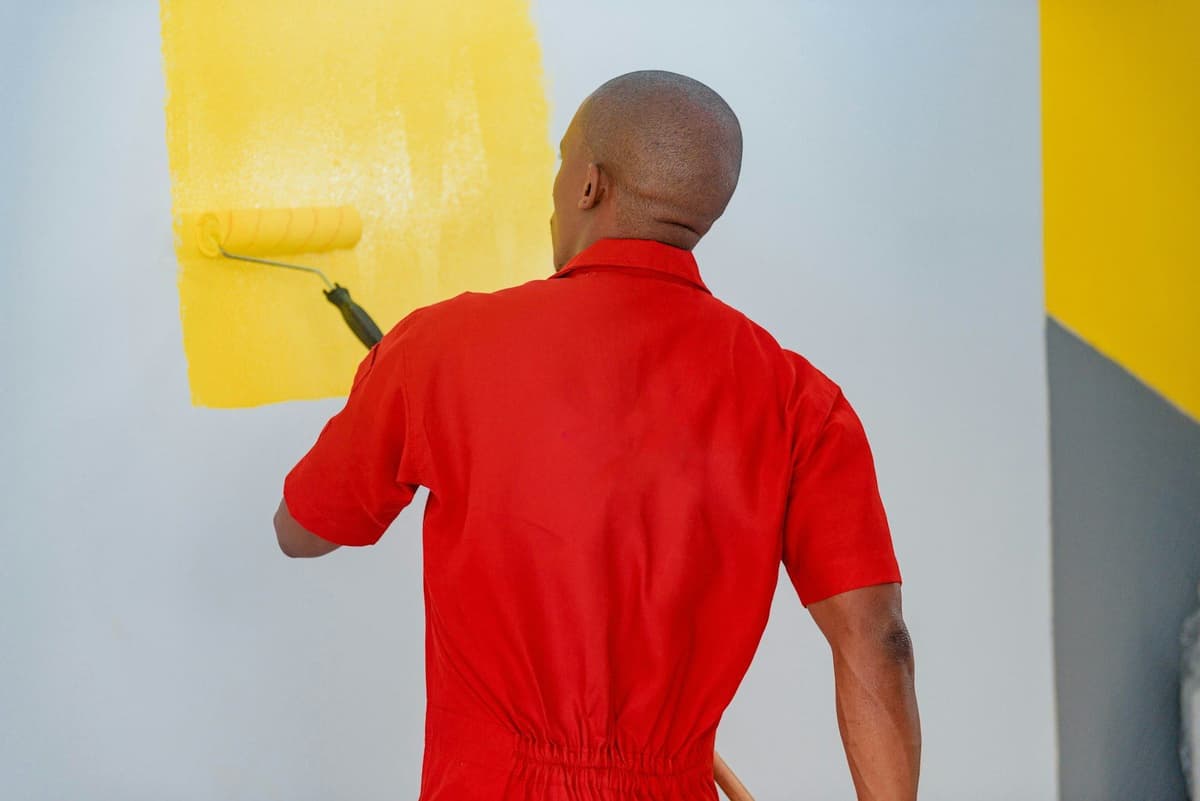
When a residential community decides to repaint the hallway, staircase or facade, the same question almost always arises among residents: is that VAT 10% or 21%? The answer does not depend on the painter's goodwill or what the community notice says, but on specific tax conditions that are worth understanding before approving the expense at the meeting.
When painting in a residential community qualifies for reduced VAT
Requirements the work must meet
VAT law sets a general rate of 21% for most services, but reserves a reduced rate of 10% for renovation and repair works in properties that meet certain conditions. The recipient must be a natural person, not acting as a business or professional, and use the property for their own personal use; it also applies to residential communities. In addition, construction or rehabilitation of the property must have been completed at least two years before the work starts.
The third requirement is the one that generates the most questions among building administrators: the person carrying out the work must not supply materials for its execution, or if they do supply them, their cost cannot exceed 40% of the taxable base of the operation. If that threshold is exceeded, the entire invoice falls under 21%, not just the part exceeding the percentage.
What painting work qualifies under the rule
Residential communities typically approve several types of painting work, and not all are taxed the same:
- Painting of hallways, staircases and interior common areas: reduced rate if all three requirements are met.
- Facade repair work and exterior painting services1 on the building exterior: these may also qualify for 10%.
- Painting a commercial space within the same building: subject to 21%, because the destination is not a private residence.
- Work financed by insurance rather than paid directly by the community: in that case the applicable rate is usually 21%.
If the community combines facade, hallway and any commercial space in the same work, it is advisable to ask the professional to clearly break down which parts correspond to residences and which do not, because mixing everything into one line item can complicate the application of the reduced rate.
The residential community as a tax recipient
Why the community counts as a final consumer
For VAT purposes, a residential community is a final consumer: it pays VAT on the services and works it contracts and, as a general rule, cannot deduct it. This means that any error in the rate applied directly impacts residents' pockets, with no possibility of recovering it later, unlike what would happen with a business.
The role of the declaration of responsibility
For the professional to issue an invoice at 10% without assuming risk in an inspection, it is common for them to ask the community to sign a brief document. They will likely ask you to sign a declaration of responsibility, a simple document confirming that the property is used for private purposes and is over 2 years old.2 In the case of communities, this document is usually signed by the president or administrator on behalf of the residents.
This step is not a bureaucratic whim: it protects both the community and the professional if the tax authority reviews the transaction later. Before approving a building painting quote, it is worth asking directly whether the VAT shown already takes these requirements into account or whether it is still pending confirmation.
How to avoid surprises in the community expense
Compare quotes using the same tax criteria
A quote that appears cheaper may be calculated with 21% without anyone having reviewed it, while another with the 10% correctly applied turns out to be more precise. Before submitting the expense to a vote at the meeting, it is useful to ask each professional to indicate the VAT rate applied and the reason.
| Building situation | Probable VAT rate | Reason |
|---|---|---|
| Painting of hallway and staircase, building over 2 years old, residential only | 10% | Meets the three requirements of art. 91 VAT Law |
| Facade painting in mixed building (residences and commercial spaces) | Depends on proportion | Can be divided according to use of each part |
| Painting paid by insurance after a claim | 21% usual | Payment is not made directly by the community |
| Work with materials exceeding 40% of budget | 21% | Exceeds legal materials threshold |
What to request before approving the expense at the meeting
- Request that the quote indicates the VAT rate applied and not just the total with taxes included.
- Confirm the age of the building according to the property register or final construction certificate, in case questions arise about the two-year requirement.
- Ask for photos and videos of the actual condition of facade, hallway or staircase, since a price per m² is always indicative until seeing the actual surface: two facades with the same extension may have very different cracks, moisture or degraded plaster, and the final price is only confirmed after assessing that real condition, whether via photos and videos or an on-site visit. On our platform, photos and videos of surfaces are always requested before finalising any quote, precisely to avoid surprises mid-work.
- Put in writing the exact scope of the work (which walls, which facade, whether it includes primer or just finish coat). On our platform all job details are recorded online, so the client, professional and platform can consult the agreed scope at any time.
A practical step before the next meeting
If the community plans to vote on a painting item in the coming months, the time to clarify VAT is before the meeting, not after signing. Asking two or three professionals to explain in writing which rate they apply and why allows you to compare quotes with consistent criteria and avoids the final community expense rising due to a tax classification error. It is also worth asking whether the professional or company executing the work is registered as self-employed or has a properly incorporated company; on our platform that verification is always done before presenting a professional as an option, which adds an extra layer of confidence for the community.
If in addition to the facade the interior of some common areas with old walls is to be repainted, it is a good time to check whether there is gotelé (sprayed textured coating) in hallways or landings of older buildings, since that type of surface needs different preparation before applying the final paint, something that should be clarified in the same quote.
Frequently Asked Questions
No. It depends on meeting at the same time the requirements of building age, destination as a private residence and proportion of materials. If even one of these requirements is missing, the entire invoice falls to 21%.
Normally it is signed by the president or building administrator on behalf of the community, confirming the age of the building and that it is intended for private residential use. This document protects both the community and the professional in case of a tax authority review.
Not necessarily. If the space is used for an economic activity, that part of the work is usually subject to 21%, even if the rest of the building is private residences and may benefit from the reduced rate.
In that case the entire operation is subject to 21%, not just the part corresponding to materials. That is why it is advisable to ask the professional to clarify that proportion before approving the expense at the meeting.
No. A quote can be drawn up just as well from photos and videos of the condition of a facade or common areas as from an on-site visit; both methods are valid. What matters is that the professional has seen the actual condition of the surface before finalising the price.
Ready to paint?
Get free quotes from verified local painters in minutes. No commitment.
Sources
External sources open in a new tab.