If you're planning to give your home a fresh coat of paint, you might wonder whether you need any kind of permit. The short answer is: it depends. While painting interior walls is usually minor work that doesn't require paperwork, there are situations where you will need authorization from your local council. Let's clarify when it's necessary and what steps to follow to avoid surprises.
When you DON'T need permission to paint
Most interior painting work falls into the category of cosmetic work or basic maintenance. Painting your living room walls, changing your bedroom color, or refreshing the hallway are jobs you can do freely, without needing to notify your local council or request any license.
These interventions are considered so minor that they don't generate significant debris or alter the structure or external appearance of the property. That's why building regulations don't require permission - you're simply maintaining your property in good condition.
The same applies to small touch-ups on surfaces like interior doors, radiators, or ceilings, as long as they don't involve visible changes from the outside or affect shared elements of the building.
When you DO need to request a license
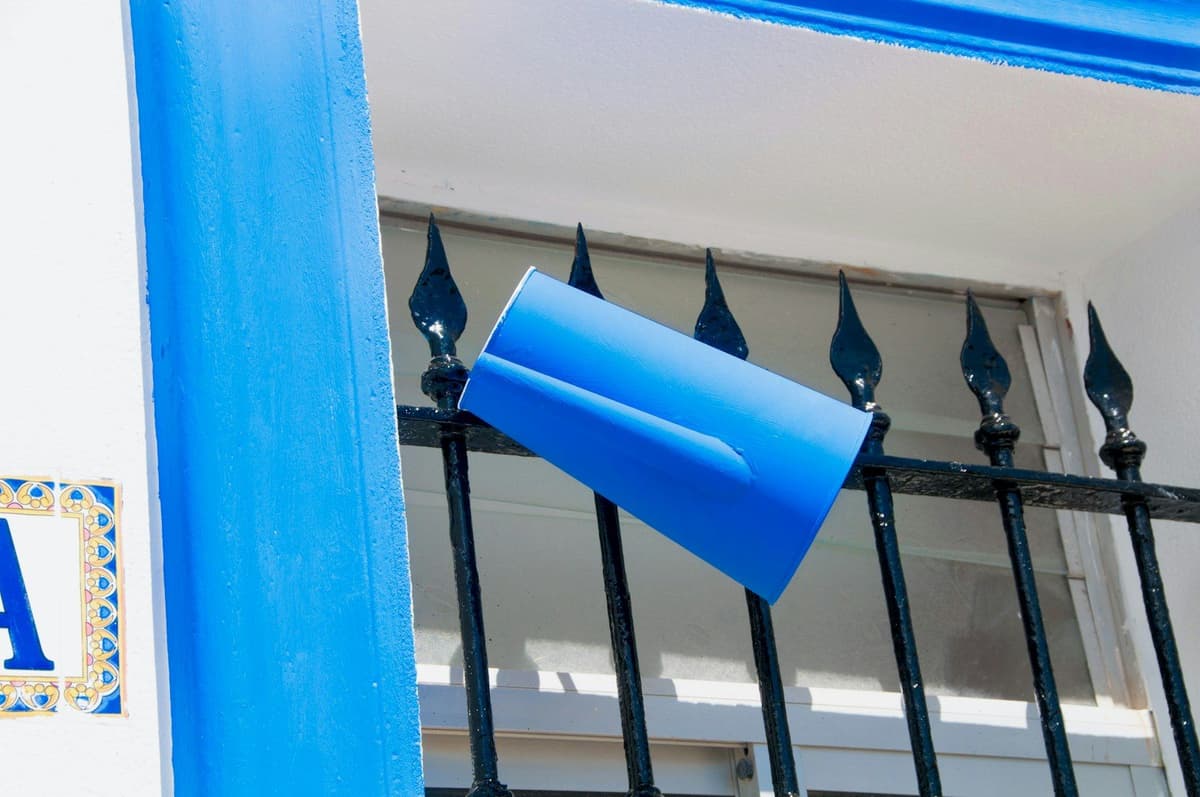
Things change when your painting plans affect the facade, entrance, or any part visible from the street. Painting the exterior of your home, even in the same color, usually requires a minor works license in most municipalities.
Why? Because the facade isn't just yours. It's part of the urban landscape that your local council has a responsibility to regulate. Changing a facade color without permission can result in a fine ranging from hundreds to thousands of euros, depending on the municipality and the severity of the violation.
In the case of protected buildings or those in historic districts, restrictions are even stricter. In these areas, even changing a shade may be prohibited if it doesn't respect the allowed color palette. Some regional authorities have specific regulations that govern facade aesthetics in areas of heritage interest.
If you live in a building with shared ownership and want to paint your apartment's facade, you'll need two things: approval from the building association (usually through a meeting) and a municipal license. Skipping either step can lead to legal problems and the obligation to repaint at your own expense.
What type of license to request and how much it costs
In most cases, painting a facade is processed through a minor works license. This permit is simpler and faster than a major works license (reserved for structural reforms). The procedure varies by municipality, but generally includes submitting an application, a work quote, and in some cases, photos of the current state.
The license cost is usually calculated by applying a percentage (typically between 3% and 5%) to the declared work budget. Additionally, some municipalities charge a fixed administrative fee. Processing times vary: in small towns it can be resolved in a few weeks, while in large cities it may take one to two months.
It's important to remember that if you hire a professional to do the work, they are not responsible for requesting the permit. That responsibility always falls on you as the owner. A good painter or renovation company will warn you if the work requires a license, but you must manage the paperwork yourself or hire an administrator to do it.
The VAT on painting: 10% or 21%
Although not directly related to permits, it's useful to know that the VAT on a painting job also depends on several factors. If you hire a professional to paint your primary residence and the house is more than two years old, you may be able to benefit from the reduced VAT of 10% instead of the standard 21%.
For this, three conditions must be met: you must be a private individual, the home must be at least two years old, and the materials supplied by the contractor must not exceed 40% of the total work cost. If these requirements are met, the invoice should apply the reduced rate, resulting in considerable savings. The contractor may ask you to sign a responsibility declaration confirming that you meet the conditions.
If you're painting a commercial space, a second residence intended for rental, or if materials exceed that 40%, the standard 21% VAT will apply. The VAT rules may differ depending on your location.
What to do if you already painted without permission
If you've already painted your facade without requesting a license and you receive a notification from your local council, don't panic. In many cases, it's possible to regularize the situation by submitting a legalization request. This process involves paying the corresponding fee (sometimes with a surcharge) and demonstrating that the work complies with current regulations.
The worst thing you can do is ignore the notification. Fines can increase over time and, in extreme cases, the council may require you to restore the facade to its previous state. If you have doubts, consult an architectural technician or administrative manager familiar with local regulations.
Practical steps before you start painting
Before hiring anyone or buying paint, follow these steps to ensure everything is in order. First, identify what you're going to paint: if it's interior only, go ahead. If it includes the facade, entrance, external shutters, or anything visible from the street, check with your local council.
Second, check if you live in a protected area or historic district. You can verify this on your council's website or by calling the planning department. In these areas, restrictions are stricter and may require you to use specific colors.
Third, if you live in a building with multiple units, review the rules and speak with the building administrator. Many buildings have internal rules about aesthetic changes that you must respect, even if the council gives you permission.
Fourth, get detailed quotes that include labor and materials separately. This will help you calculate the applicable VAT correctly and justify the cost to the council if you need a license.
Finally, always keep your invoices. If you decide to sell your home in the future, having documentation proving the work was done correctly can facilitate the sale and avoid problems with the buyer or your mortgage lender.
Start on the right foot
Painting your home can completely transform the atmosphere of your living space, but doing it without knowing the rules can be expensive. If you're going to touch the facade, entrance, or elements visible from the street, take a few days to consult with your local council. A small administrative step now will save you fines, headaches, and potential conflicts with neighbors or officials. And if everything is in order, enjoy the process: choosing colors, watching your space transform, and freshening up your walls is one of the simplest and most satisfying ways to care for your home.

Ready to paint?
Get free quotes from verified local painters in minutes. No commitment.