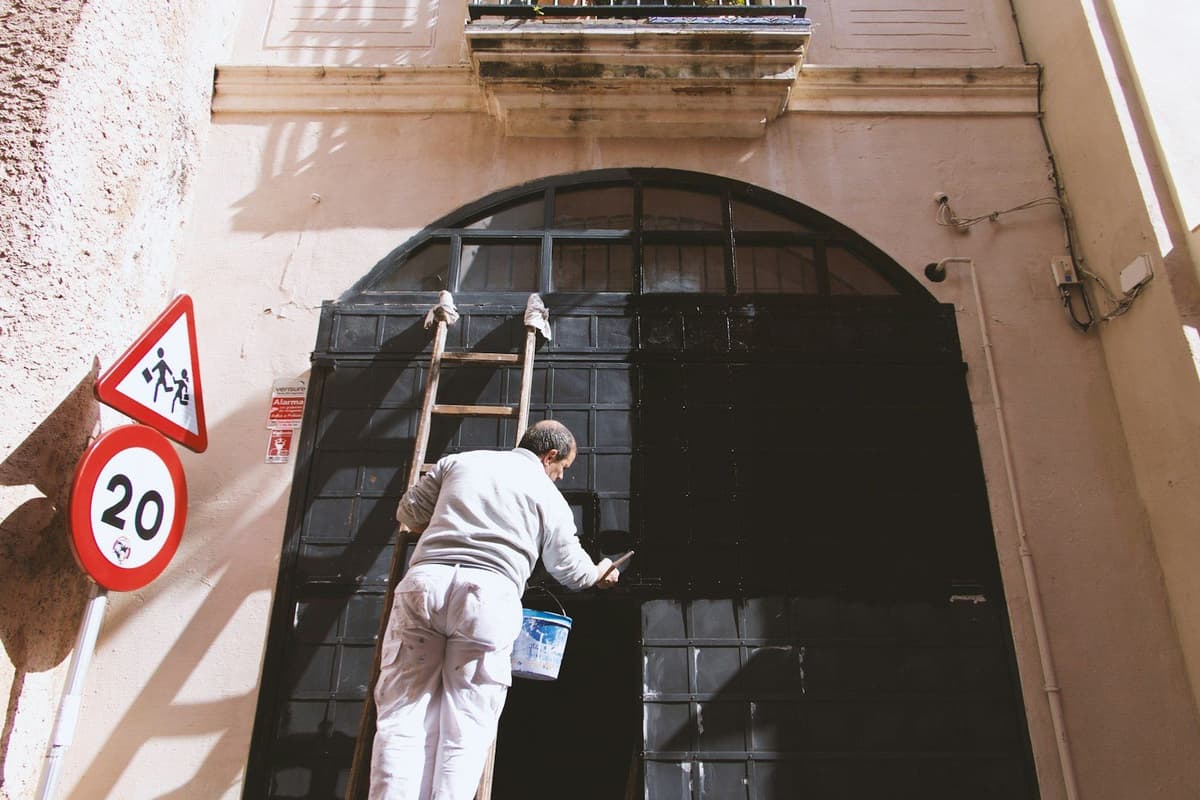
Preparing a flat to sell or rent does not mean renovating it completely. Painting is the improvement with the best cost-to-impact ratio, and light, neutral tones make rooms feel larger and brighter. Many owners invest time and money in complete renovations that barely recover in the final price, while well-planned painting can transform how a property is perceived with minimal investment.
This article explains how to decide what to paint, which colours to choose, when it is not worth spending, and how to organise the work so results stand out in photos and viewings.
Why paint before putting the flat on the market
Paint changes first impression
A freshly painted flat looks better immediately: photos turn out better, listings perform better, and viewings typically get a more positive reaction. On property portals, where competition is fierce, the difference between a listing that generates viewings and one that goes unnoticed often comes down to how the walls look.
Even if the flat is clean and tidy, walls with stains, dull colours, or peeling paint signal poor maintenance. The potential buyer or tenant will not think it is easy to fix; they will think the flat lacks proper upkeep and may have hidden problems.
Painting speeds up the sale or rental
Strategic small improvements for under 3,000 euros can bring more viewings, better perceived value, less negotiation, and shorter time to market1. A flat sitting for weeks or months without a tenant or buyer represents opportunity cost: each month without rent is lost income, and each week without a sale may force you to lower the price.
Painting does not guarantee an immediate sale, but it does reduce buyer or tenant resistance at the viewing.
When NOT to paint before selling
There are two situations where painting adds no value:
- If you sell the flat at a renovation price and the buyer is going to strip all the walls anyway. In that case, painting is wasted money.
- If you plan to do work between tenants (change flooring, update utilities, reconfigure layout), wait until the work is done before painting.
In most other cases, painting beforehand pays off.
Which rooms to paint when selling or renting
Paint what buyers or tenants see in the first 30 seconds
The practical rule is simple: paint the areas someone sees immediately upon entering. These carry the most weight in their decision:
- Entrance hall: it is the first thing visible when the door opens.
- Living room: the main space in photos and during viewings.
- Master bedroom: especially if visible from the hallway or part of the normal viewing route.
- Stained ceilings: particularly in the kitchen, bathroom, or areas where there have been leaks (already repaired).
Which rooms you can leave unpainted
Not every wall needs fresh paint. You can save on:
- Insides of built-in wardrobes that are not visible in photos or viewings.
- Storage rooms or small utility rooms that are not part of the viewing route.
- Walls the buyer will remove: if the flat has plasterboard partitions in poor condition or outdated layout that many buyers want to change, painting those walls adds nothing.
Our article on which rooms to paint when selling or renting your flat expands this strategy room by room.
Which colours to choose to sell or rent faster
Neutral colours: the safest option
To appeal to the broadest range of buyers, colour psychology tells us to choose neutral tones, as they generate the least resistance and allow people to imagine a home that suits their taste.
The most recommended tones in 2026 are:
- Off-white: provides light without feeling cold. The most versatile option.
- Soft stone grey: elegant, modern, works with any furniture style.
- Warm sand or beige: adds warmth without overpersonalising the space.
This year's featured tones are warm beiges, soft greens, terracottas, and light browns, all inspired by nature; these palettes create relaxed environments and pair easily with almost any style.
Colours to avoid
- Dark colours (burgundy, navy, charcoal grey on entire walls): reduce light and can make spaces feel smaller. They also signal neglect or sadness.
- Very personal colours (hot pink, lime green, deep purple): may appeal to a minority but deter most buyers or tenants.
Differences between selling and renting
| Decision | If you sell | If you rent |
|---|---|---|
| Painting goal | Make the photo compelling and viewings find no faults | Leave the flat clean, neutral, and easy to maintain between tenants |
| Recommended colour | Off-white, light grey, sand (expands space and lets buyer envision it) | Washable white or light, scuff-resistant tones |
| Paint everything? | Not always: prioritise visible, photographed areas | More often yes, due to accumulated wear and to match tones |
| Paint quality | Uniform finish; premium range not needed if flat is handed over for renovation | Washable, durable paint is worth it: withstands more cycles |
How to organise the painting work
Request quotes that include surface preparation
A painting quote should include:
- Protection of floors, doors, windows, and sockets with plastic and painter's tape.
- Repair of holes, cracks, and peeling paint with filler or plaster, sanding, and sealing.
- Primer on new, repaired, or stain-marked surfaces (where moisture has already been fixed).
- Coats of paint needed (usually two) to cover the old colour well.
- Clean-up and removal of protections upon completion.
Our platform always requests photos and videos of surfaces before finalising any quote, precisely to avoid surprises mid-project. Two flats of the same size can have walls in very different condition (cracks, old water stains, heavy textured finishes), and this affects cost and time required.
Do not paint over unresolved problems
It does not help to paint over real problems like active moisture or mould; these must be solved first, because painting without fixing is a shortcut and will show eventually.
If your flat has moisture stains, structural cracks, or visible old installations, painting over them is concealment. The buyer or tenant will spot it during the viewing, and the feeling will be worse than if you had left the wall unpainted.
Our article on how to identify moisture sources before painting explains how to tell active moisture from old, already-resolved stains.
When to paint: before photos, not after
Ideal timing is to paint before taking photos for the listing and before viewings begin, so the property presents with better appearance, more light, and a well-maintained feel from the outset.
If you publish the listing with stained walls and paint after, early viewings have already seen the flat in poor condition. Those first impressions are hard to reverse.
How much does it cost to paint a flat before selling or renting
Indicative prices per square metre
The cost of painting a flat in Spain varies by city, wall condition, and paint quality. As a general reference:
- Basic painting (no repairs): EUR 8-12 per m² of surface to paint.
- Painting with surface preparation (fill holes, sand, prime): EUR 12-18 per m².
- Complete painting with crack or old moisture repair: EUR 18-25 per m².
These are indicative prices. Final cost can only be confirmed once the professional has assessed the space (through photos and videos, or a visit; both options work equally).
Example: 70 m² flat in Madrid
Suppose a 70 m² flat where you want to paint the living room, hallway, entrance, and master bedroom (roughly 50 m² of floor, equivalent to about 120-140 m² of surface including walls and ceilings):
- Basic option (walls in good condition, no repairs): EUR 1,200-1,600.
- Option with preparation (fill holes, sand imperfections): EUR 1,600-2,200.
- Complete option (repair cracks, remove textured finish in some areas, prime stains): EUR 2,200-3,000.
Our article on factors affecting the cost of painting a home details exactly which elements raise or lower the price.
Return on investment
An aesthetic improvement with painting might cost EUR 5,000 and increase the home's estimated value by EUR 15,000-20,000, a far more efficient result than a complete renovation2. It is not that painting automatically raises the sale price by a fixed percentage, but rather that it reduces buyer objections and speeds up the decision.
How to hire a painter for this type of work
Request several quotes and compare scope
Do not settle for the first price offered. Request at least three quotes and ensure they all include the same items:
- Number of paint coats.
- Surface preparation (filler, sanding, primer).
- Floor and furniture protection.
- Final cleaning.
- Paint type and quality (brand, finish, coverage).
Our platform verifies that all professionals are registered as self-employed or have a registered company before presenting them as an option, so you do not have to check this yourself.
Payment: 50% upfront, 50% upon completion
When you contract through our platform, payment works as follows: 50% upfront (to secure the date and buy materials) and 50% upon completion, after work verification. We never present three-payment schemes (such as 30-40-30) as our platform model. Such schemes may appear in the general market, but on our platform the model is always half upfront, half upon completion.
Everything is written and visible to all three parties
On our platform, all work details are recorded online: the client, the professional, and the platform can see the agreed scope in writing. This is not a paper agreement, a private message, or a handshake; the scope is visible to all three parties, which reduces misunderstandings and makes it easier to claim if something is not delivered.
Our article on what to include in a contract with your painter details what clauses such an agreement should have.
Frequently Asked Questions
It is not required by law, but painting greatly improves tenant perception and can help you rent faster or at a better price. If the flat has heavily stained walls or dark tones, painting before showing it is highly recommended.
No. If the buyer is doing a complete renovation and stripping the walls, painting beforehand is wasted money. In that case, adjust the price and sell the flat as it is.
Both work well. Off-white is the safest, brightest option. Soft stone grey brings a more modern, sophisticated touch, but must be a light grey to avoid reducing light. Avoid dark greys in small flats or those with little natural light.
You can paint yourself if you have experience and time, but professional finish makes a difference in photos and viewings. An experienced painter leaves walls uniform, without roller marks, no splashes on skirting or ceilings, and properly conceals defects before painting. If the goal is to sell or rent, that professional finish usually justifies the cost.
It depends on wall condition and how many rooms you paint. As a general reference, painting a living room, hallway, and two bedrooms (with surface preparation and two coats) usually takes 3 to 5 working days. If textured finish must be removed, cracks repaired, or long drying times between coats allowed, it can stretch to a week.

Ready to paint?
Get free quotes from verified local painters in minutes. No commitment.
Sources
External sources open in a new tab.