A building's facade is not only about aesthetics; it is the first line of defence against the weather. It acts as a barrier against rain, cold, solar radiation and pollution1. In Spain, where the climate ranges from intense rainfall in the north to extreme heat in the south, the maintenance schedule must take those differences into account. This article brings together the key inspection points you should review before autumn and winter arrive.
Why Spain's climate demands a pre-winter facade check
Weather conditions from September to March across different Spanish regions subject facades to very different stress cycles. Water infiltration through facades is one of the most common problems in buildings, especially in urban areas like Barcelona where exposure to rain, material wear and lack of maintenance favour water ingress. In Galicia, Asturias and the Basque Country, constant rainfall means any crack or poorly sealed joint becomes a pathway for moisture. In Madrid or Valencia, sharp temperature swings between day and night cause mortar expansion and contraction, which opens cracks over time.
In southern areas with very hot summers (Seville, Malaga, Murcia), a matte black or charcoal grey facade can reach 65-75 °C surface temperature in summer in sunny areas of southern Spain, compared to 35-45 °C for a white facade. That difference does not only affect indoor comfort; it also stresses paint and render. The result: flaking, loss of adhesion and, when winter rain arrives, water entry through degraded areas.
Even if the building complies perfectly with the Building Technical Code (CTE) to prevent moisture, proper maintenance of it is always necessary2. Catching small defects like cracks, moisture or spalling early on prevents costly repairs down the line.
What facade points to inspect before autumn
Cracks and fissures in the render
Small fissures often go unnoticed. Over time, however, they become pathways for water and other external agents. Inspect the entire visible surface with raking light (early morning or late afternoon): fine cracks show up better in side light. Pay special attention to window corners, junctions between wall sections and areas where materials change (for example, exposed brick with render).
If you detect surface cracks (less than 1 mm wide), sealing usually suffices. Wider cracks or ones that are actively growing require professional assessment: they may signal structural movement, settlement or a construction defect. In any case, it is better to seal before water arrives.
Expansion joints and window seals
Joints between window frames and walls, between balconies and facade, or at junctions of different materials are subject to constant expansion and contraction cycles. Check whether the seal shows cracking, loss of adhesion or disappearance of the sealant bead. Deteriorated sealing allows rainwater to penetrate behind the frame and reach the interior.
The ideal window for renewing seals is late summer or early autumn, when temperatures are still mild and dry weather allows the new sealant to cure properly. Our platform can help you request a quote and confirm that the professional has seen the affected areas (via photos or a visit) before finalising the work.
Paint condition and areas with flaking
Continuous exposure to the elements, weather events, long hours of sunlight and temperature changes directly affect the outer layer of buildings. Rain is a major factor in erosion and deterioration. When it rains, dirt particles on the surface are carried deep into the porous materials of the render, permanently staining the facade.
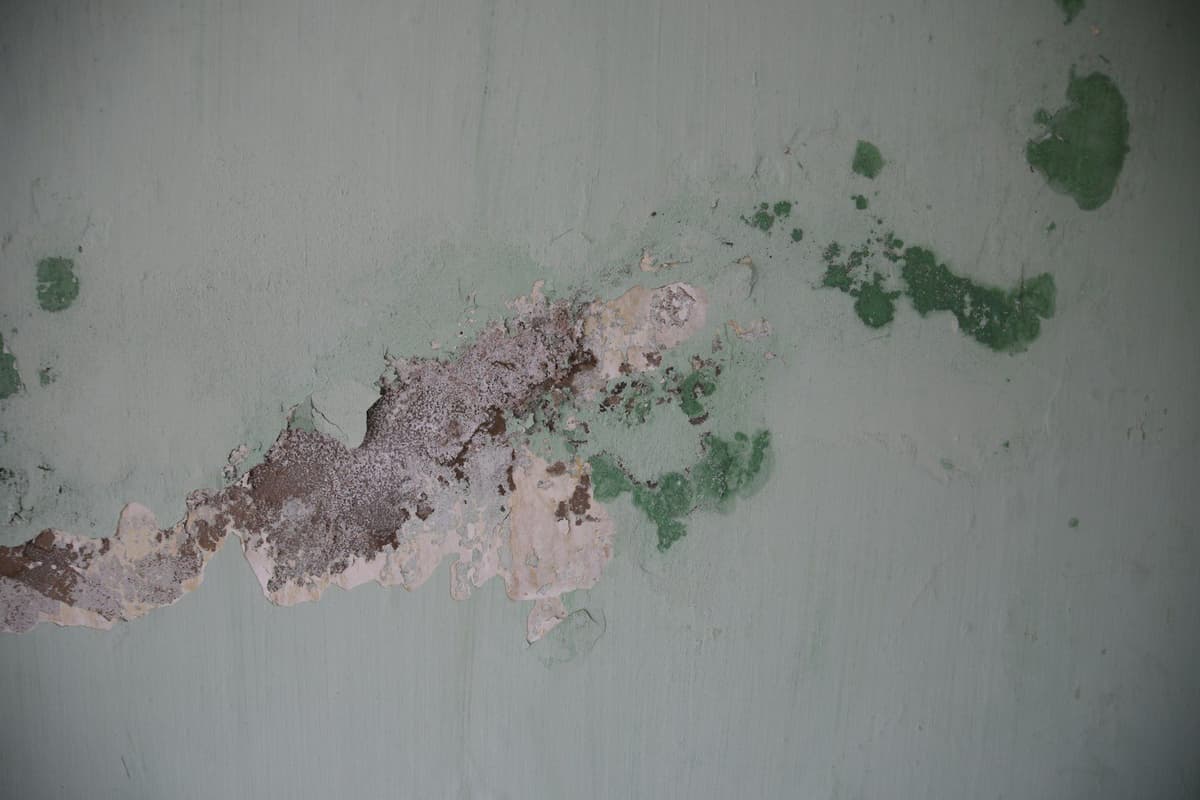
If the paint shows flaking, loss of adhesion or areas with different colour (a sign of internal moisture), it is time to act. This is not just about looks: damaged paint no longer protects the substrate. When water penetrates unprotected mortar or brick, it carries soluble salts that emerge as white stains (efflorescence) and, in freeze-thaw cycles (common in central Spain), can cause spalling.
Moisture marks and mould in shaded areas
Facades facing north or areas under eaves, protected from direct sunlight, accumulate moisture and develop mould and algae. Moisture promotes the growth of mould and microorganisms that accelerate decay. In Barcelona, Bilbao or Zaragoza, where relative humidity can be high even in summer, these green or black marks appear frequently.
Before painting over a mouldy area, you must remove the biofilm with mechanical cleaning and a biocide product. Painting directly over mould will reappear within weeks. The treatment is straightforward, but must be done before the rainy season makes the problem worse.
When to hire a professional and what to verify
You can do a basic inspection yourself with a ladder and an afternoon of clear light. If you find cracks wider than 2 mm, areas with spalling, persistent moisture on the inside of the house on the external wall, or damage at several points on the facade, it is time to request professional assessment.
When you request a quote, make sure the professional has seen the actual facade (via photos and videos, or a visit), not just the square metres. When water penetrates the facade, it can degrade the render, cause spalling and even affect structural elements if not dealt with promptly. A proper inspection identifies the root cause, not just the visible symptom.
Our platform verifies that the professional is registered as self-employed or has a registered company before presenting them as an option, and the agreed quote is put in writing, visible to all three parties (client, professional and platform). If the work requires staged payments, remember that the standard arrangement is 50% at the start (to reserve the date and buy materials) and 50% at the end, after verifying the result.
Practical schedule: when to act by region
Galicia, Asturias, Cantabria and Basque Country
The optimal window for facade work is May to September. Spring (April-June) and autumn (September-October) are ideal: temperatures between 10°C and 30°C and low humidity. October already sees frequent rainy days. If you spot a problem in September, act immediately: by November conditions no longer allow painting with confidence.
Madrid, Castile and León, Castile-La Mancha, Aragon
Summer's extreme temperatures (above 35°C) are not ideal for painting; rapid drying can cause bubbles and poor adhesion. The optimal period is April to June and September to October. November still allows work on dry days, but it is best to finish before night frosts arrive (December to February in inland areas).
Catalonia, Valencian Community, Murcia, Andalusia
The south and east coast allow work practically year-round, but avoid the peak heat of July and August. The most comfortable window is March to June and September to November. September is still warm but evenings cool down, improving water-based paint curing. In inland Andalusia (Granada, Córdoba), check the forecast: autumn can bring sudden torrential rain that forces you to protect the work.
Canary Islands and Balearic Islands
The mild climate allows interventions almost all year. In the Canary Islands, the least favourable window is December to February due to frequent dust storms and wind. In the Balearic Islands, avoid November to January for Atlantic rains. The rest of the year conditions are excellent.
What to do if damage is already visible
If the facade shows moisture marks inside the house, recurring paint flaking despite repainting, or constant efflorescence, repainting alone will not solve it. You need to identify the source of the leak and apply a proper repair. It could be a roof waterproofing problem, blocked gutters, rising damp from the ground, or poorly managed interior condensation.
In those cases, professional diagnosis is the first step. A serious quote is based on having seen the actual problem, not a telephone estimate. Our platform requests photos and videos of affected surfaces before finalising any quote, precisely to avoid surprises mid-way through the work.
Pre-winter inspection of your facade does not require advanced technical knowledge, but it does require good judgement and a clear schedule. Spotting cracks, deteriorated seals, flaking paint or moisture marks in time allows you to act with breathing room, choose the professional carefully and finish the work before weather conditions complicate everything. Preventive maintenance always costs less than emergency repair.

Ready to paint?
Get free quotes from verified local painters in minutes. No commitment.
Sources
External sources open in a new tab.